
Do you often find yourself torn between digital and mechanical watches? Some prioritize precision and convenience, while others favor mechanical aesthetics—but which is truly right for you? While some appreciate the accuracy and low-maintenance nature of digital watches, others are captivated by the intricate movement of gears in mechanical timepieces. In reality, both types have their pros and cons; the choice depends on your lifestyle and needs. Pick the right one, and it becomes a cherished favorite; pick the wrong one, and it risks gathering dust in a drawer.
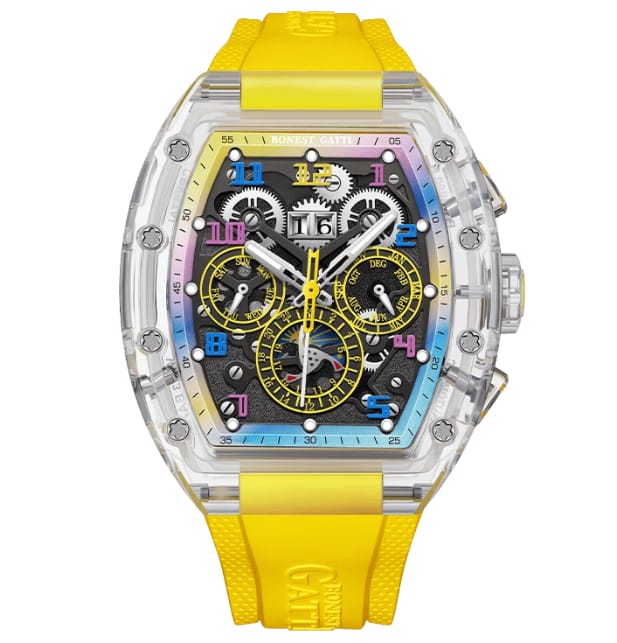
The core advantages of digital watches are precision and convenience. Take quartz movements, for instance: powered by a battery that drives a quartz crystal to vibrate at high frequencies, they typically deviate by only about 15 seconds a month—far outperforming mechanical watches, which may vary by up to 30 seconds a day. Their water and shock resistance make them practical for daily commutes and workouts; you don’t have to worry about sweat damage while running, and they can even be worn while swimming. Furthermore, they offer a wealth of features—such as heart-rate monitoring, step counting, and alarms—making them ideal for young people who value technology. However, digital watches have distinct drawbacks. Over time, the casing is prone to aging and yellowing, as resin lacks the durability of metal; additionally, many designs lean towards sporty or cartoonish styles, making them difficult to pair with formal attire. Most importantly, digital watches lack the “soul” of mechanical ones—the ritualistic pleasure of watching gears mesh through a transparent case back, and the collectible value that comes with the passage of time.
The allure of mechanical watches lies in their mechanical beauty and the value of time itself. A certified chronometer-grade mechanical watch can keep daily deviation within a range of -4 to +6 seconds, offering stability that rivals or even surpasses quartz watches. Inside, hundreds of components mesh with precision; from the winding of the mainspring to the transmission of gears, every movement resembles a miniature mechanical ballet. High-end mechanical watches are akin to works of art; complications like tourbillons and perpetual calendars serve not merely as timekeeping tools but as the pinnacle of watchmaking craftsmanship. Moreover, mechanical watches hold their value far better than digital ones; timepieces from brands like Rolex or Patek Philippe, if well-maintained, can even be passed down through generations. That said, mechanical watches are also notoriously “delicate.” They are highly susceptible to magnetic fields and temperature fluctuations, and vigorous movement can affect timekeeping accuracy; professional servicing is required every five years—often costing over a thousand yuan—and the entry price is steep, with even basic models costing several thousand yuan. For busy professionals, the daily hassle of winding the watch or the anxiety about accidental bumps may well outweigh the sense of ritual that a mechanical watch provides.
Before choosing a watch, ask yourself three questions: Will you wear it primarily for business, sports, or casual settings? How important is timekeeping precision to you? Within your budget, do you prioritize practicality or collectibility? If you value convenience and utility, an electronic watch is the best choice; if you appreciate mechanical craftsmanship and the ritualistic experience, a mechanical watch is a more worthwhile investment.